Running operations across branches you cannot visit
Branches you cannot visit are run on what they report, not on how often you travel. Decide a small set of numbers every branch sends every day: cash against sales, stock in and out, and exceptions such as voids, adjustments and credit beyond terms. Give each number a named owner and a fixed time. Review exceptions weekly, run surprise counts as routine at every branch, and write down which decisions each branch manager makes alone.
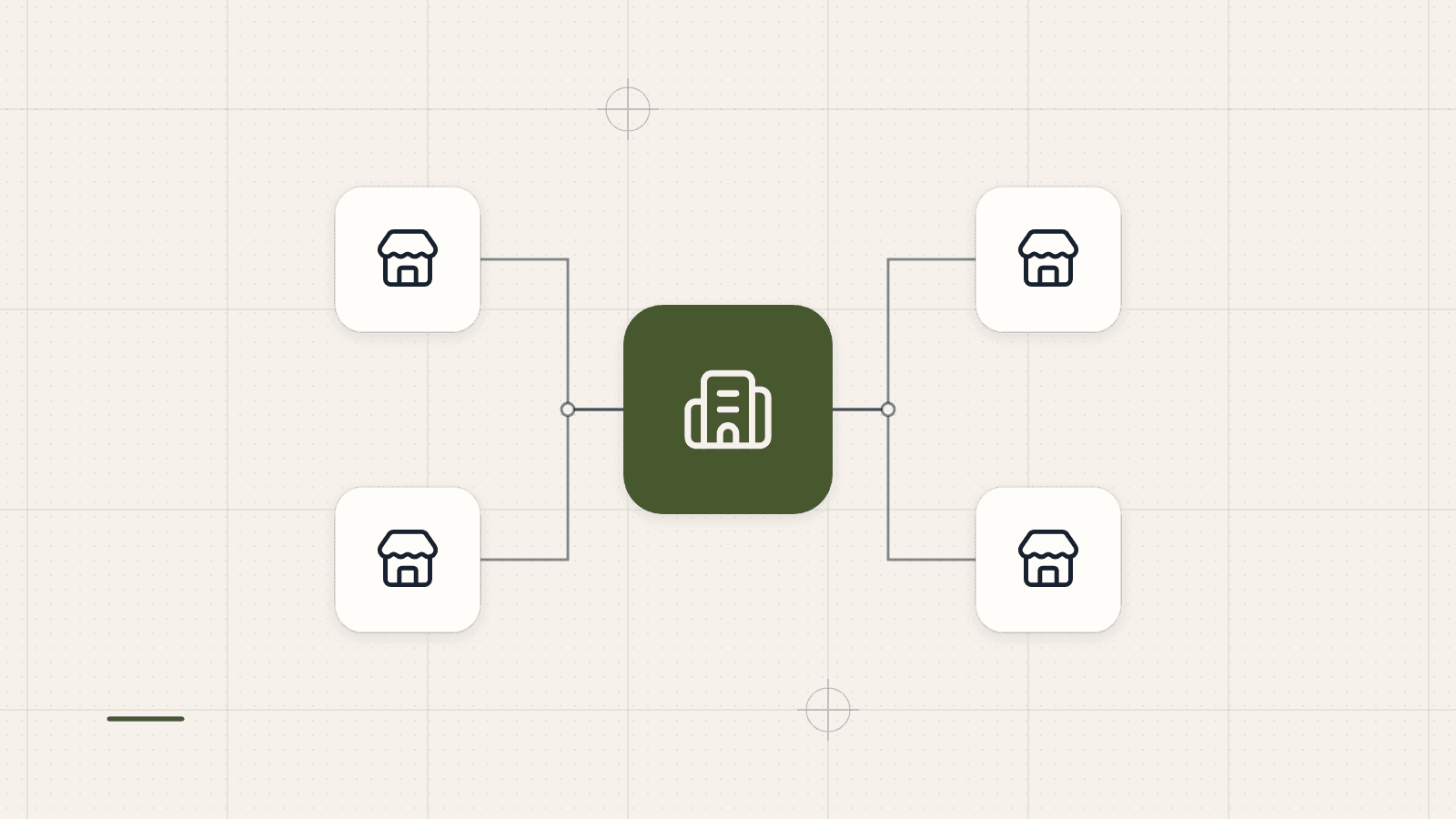
Why do branches you cannot visit drift?
Because the gap between when something happens and when anyone checks it grows with distance, and most problems live in that gap. A depot four hours away by road gets visited monthly at best. In between, what headquarters knows about it is whatever the branch chose to send, in whatever form, whenever it was sent.
Fraud is the extreme case, but it shows the mechanism clearly. The ACFE's Occupational Fraud 2026 report, built from 2,402 cases investigated by fraud examiners in 143 countries and territories, found that one-third of frauds occurred because the organization lacked internal controls, another 19% because existing controls were overridden, and 18% because of a lack of management review. Together those three weaknesses accounted for 70% of the cases. The typical case ran 12 months before it was detected.
Most branch drift is not fraud. It is a transfer recorded at one end and not the other, a delivery counted in cases at the depot and in pieces at headquarters, a discount given on the phone and never written down. The cause is the same though: nobody looks at the record soon enough to notice it disagrees with what happened. Distance makes that worse, and the fix is not more travel. It is a shorter gap.
What should every branch report every day?
Three things, sent at the same time every day by a named person: cash against sales, stock movements, and exceptions. A daily report that takes ten minutes to fill in tells you more than a weekly report that takes two hours, because problems are smaller when they are a day old and the person who caused them still remembers. Keep each item to a number or a short list. Anything longer stops being sent within a month.
I think the instinct to ask branches for more information is almost always wrong. The goal is the fewest numbers that would show you a problem within a day. Everything else can wait for the weekly or monthly review.
Cash against sales
Sales recorded for the day, cash and collections received, deposits made, and the difference. A difference is not an accusation. Most are timing: a deposit made after the cutoff, a collection recorded under the wrong date. But a difference that nobody can explain by the next morning is the earliest warning you will ever get.
Stock in and stock out
Deliveries received, stock issued or sold, transfers sent to and received from other branches, and any adjustment, all in one unit of measure agreed across the business. Transfers are where multi-branch numbers break most often, because a transfer has two ends and they are recorded by two different people on two different days. Report both ends, and treat a transfer sent but not yet received as its own line, not as stock that has vanished.
Exceptions
Anything that departs from the normal rule: voided sales, discounts above the usual level, credit given beyond a customer's terms, stock written off as damaged or expired, returns. The list should be short on a normal day. A sudden rise, or a branch that never reports any exceptions at all, is worth a question. A branch with genuinely no exceptions for three months is rare enough that it usually means exceptions are not being recorded.
How do you make daily reporting actually happen?
Make it short, fixed in format, owned by one named person at each branch, due at a fixed time, and answered every time. Reports stop when the people sending them conclude nobody reads them. The fastest way to keep them coming is for someone at headquarters to reply to each one, even with a single line, and to call the same morning when one is late or does not add up.
The format matters more than the tool. A photo of a notebook page sent on a messaging app is a record if every branch uses the same page layout and the photo arrives at the same time each day. A spreadsheet that each branch has modified in its own way is not, because nobody can add the branches together without re-typing. If you are moving from messages to something more structured, when a spreadsheet stops being enough covers where that line usually falls.
- Write the daily report as a single page or form: the three sections above, with the same lines in the same order for every branch.
- Name one person per branch who sends it, and one backup for days they are away.
- Set the deadline: for example, by nine the next morning, covering the previous day.
- Name one person at headquarters who receives every report, checks that each one arrived and adds up, and replies.
- Agree what happens when a report is late or does not reconcile: a phone call that morning, every time, to every branch alike.
- After a month, ask each branch which line they never use. Remove lines nobody uses before adding any new ones.
What should a branch manager decide without asking?
Everything the daily numbers already cover, within limits you write down in advance. A branch manager who has to call headquarters for every discount or every transfer is slower than the market, and teaches customers to call the owner directly. The answer is not to give up control. It is to write down which decisions are theirs alone, which are theirs to make and report, and which come to you, and then hold to that list.
There is evidence that this kind of delegation pays, and about what makes it possible. In data on almost 4,000 firms in the US, Europe and Asia, Bloom, Sadun and Van Reenen found that trust and the rule of law facilitate decentralization of decisions from headquarters to local managers, and that decentralization is complementary with information technology. That study compared firms across regions and countries rather than branches inside one company, so read it as a direction. The direction is that delegation and good information go together. A manager you can see clearly every day is a manager you can safely give more room.
- ·Decides alone: staff rosters within the agreed headcount, routine reorders within agreed stock levels, small discounts within a written limit, which customer is served first.
- ·Decides and reports the same day: credit beyond a customer's normal terms up to a written ceiling, stock write-offs, transfers to another branch, refunds.
- ·Brings to headquarters first: new customers on credit, prices outside the agreed range, hiring and dismissal, any spend above a set amount, anything involving a relative of the owner.
- ·Reviewed together monthly: whether each limit is still right. Raise limits for branches whose numbers have been clean, and say why.
How do you check a branch without visiting it?
Use two checks that do not need travel: a weekly management review of the daily numbers and their exceptions, and surprise counts run as routine at every branch. In the ACFE's 2026 data, both were among the controls associated with the largest reductions in losses and detection time. Where surprise audits were in place, median losses were $74,000 against $149,000 without, and detection took 8 months instead of 16. Where management review was in place, the figures were $84,000 against $186,000, and 10 months instead of 18.
Those are associations in a study of fraud cases, not proof that one control causes the difference. Organizations with surprise audits probably do other things well too. They are still the best evidence available for which checks matter, and both cost little.
The remote surprise count
Call the branch on a video call at an unannounced time. Name three items, chosen that morning from the stock list. Ask the person on the call to walk to each one and count it on camera. Compare the counts against what the daily reports say should be there. The whole thing takes fifteen minutes.
Do it at every branch, on a rotation everyone knows exists, so that being counted is normal and not a sign of suspicion. A surprise count done at only one branch is an accusation. Done at all of them every month, it is how the business works.
Give staff a way to tell you
The same report found that 43% of frauds were detected by a tip, nearly three times as many as the next most common method, and that 55% of those tips came from employees. At a branch you cannot visit, the people working there see problems long before any report does. Give them a way to reach someone at headquarters who is not their branch manager, and say plainly that it exists. A dedicated phone number or email address read by one trusted person is enough.
Why do branch numbers never reconcile at month-end?
Usually because the same event is recorded at different times, in different units, or by only one of the two people involved. Month-end is when those differences are added together for the first time, so they all appear at once and look like one large problem. In most cases they are many small timing and recording differences, and very few of them are theft.
The common causes in multi-branch operations are specific, and each has a specific fix.
- ·Transfers in transit. Stock sent on the 30th and received on the 2nd sits in neither branch at month-end. Fix: record transfers as their own line until both ends confirm.
- ·Units of measure. One branch counts in cases, another in pieces, headquarters in kilos. Fix: one unit per item, agreed and printed on the count sheet.
- ·Informal borrowing. One branch lends stock to another during a shortage and nobody records it because it will be returned. Fix: every loan is a transfer, recorded at both ends, the same day.
- ·Returns, samples and breakage. Stock leaves without a sale and without a record. Fix: an exception line in the daily report, and a reason code for each.
- ·Cutoff timing. Sales after closing, deposits the next morning, deliveries received late. Fix: a single cutoff time across all branches, and the daily report always covers the same window.
Working through a difference that will not close
Take the month-end difference for one item at one branch and work backwards through the daily reports, one day at a time, until you find the first day the record and the count stopped agreeing. Then check that day against the five causes above, in order: a transfer, a unit, a loan, a return or breakage, a cutoff. Most differences are found on that day and explained by one of the five.
Write down what you found, including the cause, even when it was trivial. After two or three months the list shows which cause recurs at which branch, and that tells you which single rule to fix first. A difference nobody can explain after this exercise is the one worth a closer look, and by then you have the dates to look at.
When does a multi-branch business need a shared system?
When several branches keep separate copies of the same record and spend every month-end arguing about which one is right. That is a structural problem and it is one of the clearest cases for buying real software, because thousands of businesses need exactly the same thing. Before that point, a fixed daily report, a single unit of measure and a written transfer rule usually solve most of the disagreement for almost no cost.
My view is that systems and automation are a sequence, not a choice. Fix and document the process first, because automating a broken one only makes it faster. A shared system that receives transfers recorded at one end only will reproduce the same month-end argument, now with a subscription attached. Get the daily report working on paper or a simple form, find out which lines matter, and then buy something that records those lines once. Build, buy, or fix what you have sets out how to tell which case you are in, and the hidden hours audit shows how to put a yearly cost on the reconciliation work before you decide.
What does a weekly branch review look like?
Thirty minutes, the same day and time each week, with every branch manager on one call or in turn, working from the daily reports rather than from memory. The agenda is the same every week: exceptions first, then anything that did not reconcile, then decisions needed. Nothing is presented that was not already in the daily numbers.
The test of whether it is working is simple. By ten in the morning, can you answer each of the questions below for every branch, about yesterday, without making a phone call? If you can, you are running branches you cannot visit. If you cannot, the first thing to fix is whichever question failed.
- ·Did every branch send its daily report on time?
- ·Does cash received match sales recorded at every branch, or is each difference explained?
- ·Has every transfer sent been confirmed as received?
- ·Is any branch reporting far more, or far fewer, exceptions than usual?
- ·Is there any decision waiting on you that a branch manager needs today?
- Before the call, the headquarters reviewer lists every exception and every unreconciled difference from the past seven days, by branch.
- On the call, each branch manager explains their items. Anything explained is closed. Anything not explained gets an owner and a date.
- Review the surprise count results from the week, if any branch was counted.
- Take the decisions that were brought to headquarters under the written limits, and give an answer on the call where possible.
- Close by confirming which branch is next on the surprise count rotation, without saying when.
Common questions
How often should you visit branches you cannot easily reach?
Visits are for relationships, training and seeing what numbers cannot show, not for finding out what happened last week. With daily reports and routine surprise counts in place, a planned visit every quarter is usually enough for most branches, with more for a new branch or a new manager.
What if branch staff are not comfortable with spreadsheets or apps?
Use a paper form with the same layout at every branch and have it photographed and sent at a fixed time each day. The consistency of the format matters far more than the tool. Move to something more structured once the report is reliably sent and you know which lines matter.
Do surprise audits actually reduce losses?
In the ACFE's 2026 study of 2,402 fraud cases, organizations with surprise audits had a median loss of $74,000 against $149,000 without them, and detected fraud in 8 months instead of 16. That is an association, not proof of cause, but it is the strongest evidence available and the check costs little.
Is this only about preventing theft?
No. Most differences between branch records and reality are timing, units and unrecorded transfers. The same daily numbers that would catch theft early also catch a stockout before it costs a sale, a customer drifting past their credit terms, and a branch that needs help.
Sources
- Occupational Fraud 2026: A Report to the Nations (Association of Certified Fraud Examiners). ACFE, 14th edition, 2026. 2,402 cases of occupational fraud investigated by Certified Fraud Examiners between January 2024 and September 2025, in 143 countries and territories. Cases are those examiners chose to report, not a random sample of businesses. Figures on control weaknesses, detection by tip, surprise audits and management review read from the full PDF report, 3 October 2026.
- The Organization of Firms Across Countries (Bloom, Sadun, Van Reenen). NBER Working Paper 15129, July 2009. Data on decentralization of decisions from headquarters to plant managers in almost 4,000 firms in the US, Europe and Asia. Finds trust and rule of law facilitate decentralization, and decentralization is complementary with IT. Abstract read 3 October 2026.
If this is the problem you're sitting with, show us the task and we'll audit one workflow for free.
Show us the taskOne email, now and then
Where the hours actually go
Every new post, and nothing else. No pitch, no schedule to keep up with, one click to leave.