What AI actually does in a business that runs on paper
Three things, reliably. It reads a photograph of a document and turns it into data. It matches records that mean the same thing but are written differently. It sorts unstructured messages into categories. Everything else is either a decision a person still has to make, or a process nobody has written down. AI belongs at the capture end of your operation, not the judgment end.
Where is the paper in your business?
Name the places out loud, because the answer to what AI can do is entirely determined by them. The carbon-copy pad in the truck. The bin card taped to the shelf in the parts room. The DTR sheet the guard initials. The folder of supplier invoices on the accounts clerk's desk. The Viber thread where the branch tells head office what actually went out this morning.
Every one of those is a record that exists and cannot be queried. Somebody has the information. Nobody can ask it a question. The gap between those two states is where the hours go, and it is the only part of your operation where AI is currently doing something genuinely new.
A survey of 500 US professionals across operations, finance, admin, IT and customer support, fielded in July 2025, found respondents spending over nine hours a week moving data between places. Not analyzing it. Moving it. That is the job being described.
What does AI actually do with a delivery receipt?
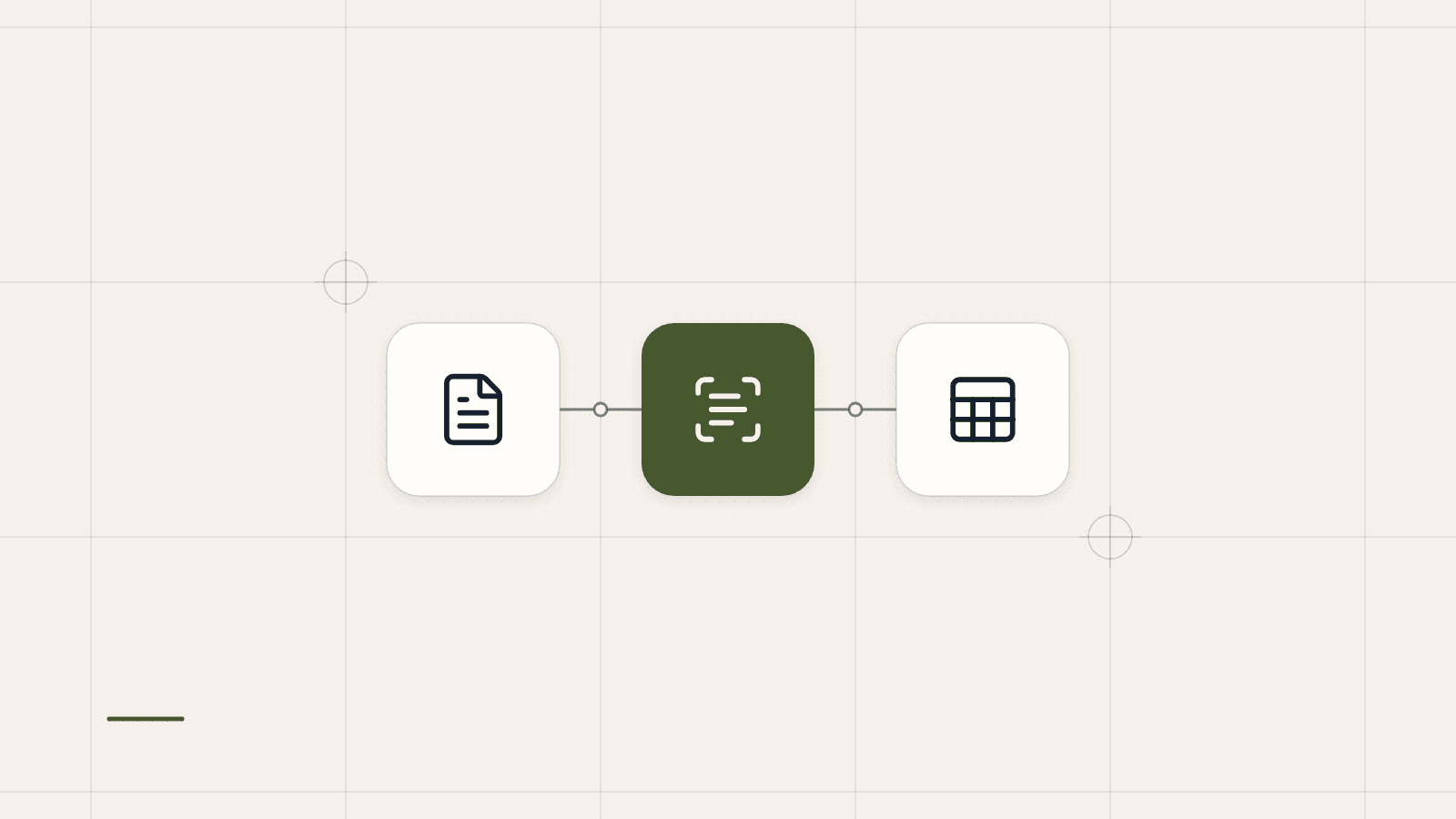
It turns a photograph of it into fields. Date, customer, items, quantities, the signature block, whatever you asked for, landing in the same place your invoice gets raised from. The driver photographs the signed copy at the gate instead of bringing a wad of paper back on Friday for somebody to type in on Monday.
That is transcription, not intelligence, and calling it transcription is the point. It is the least impressive thing on any vendor's slide and it is the one that pays for itself, because it removes a re-key at the exact place where re-keys cost you twice: once in labor, once in the digit that changes.
The limits are physical and you already know them. Handwriting that the writer cannot read back. The third carbon copy. A photograph taken in the dark on a tailgate in the rain. None of that is a reason not to do it. It is a reason to find out how often it happens in your business before you build anything on top of it.
What does it do about the same customer being spelled four ways?
It proposes matches. Given a column where the same account appears as "RJ Marketing", "R.J. Mktg" and "RJ Mktg Ent.", it will group them and tell you it thinks they are one customer. A person confirms the list once. After that you have a controlled list, and the naming problem stops recurring because there is now nothing to type freely.
Notice the shape of that. It is a one-time cleanup, not a service you rent forever. The AI does the tedious part of a job you would otherwise never get around to, and then it is finished and you do not need it for this again.
Anyone selling you that as a monthly subscription is selling you the wrong shape of thing. Ask what happens after the cleanup is done.
What does it do with the Viber group?
Two useful things. It sorts a week of messages into categories, which is how you find out what proportion of your operational chat is somebody retrieving a fact the business already possesses. And it answers questions across the whole history: what did we agree with this customer about payment terms, and when.
Both are retrieval. Neither is a decision. But a year of group chat is one of the largest undocumented records most operations own, and until recently the only way to search it was to remember roughly when something was said.
This is also the cheapest place to start, because the data is already digital. There is nothing to photograph.
What about the AI that writes things?
Useful for drafts, dangerous for anything containing a number. It will produce a reasonable first version of a customer reply, a supplier chase, or a summary of a long thread, and save a genuinely irritating twenty minutes. It will also, on a bad day, write a sentence containing a figure it inferred rather than read, in exactly the same confident tone as the sentences that are true.
So the rule is short. It drafts, a person sends. And nothing it writes originates a number: figures come out of the record, the wording comes out of the model, and those two jobs do not get combined because you cannot tell by reading which is which.
This is the capability everybody has already tried, which is why it sets the expectations for everything else. Being fluent is not the same as being right about your operation, and most of the disappointment in this field lives in the gap between those two.
What can it not do, no matter what the demo showed?
Five things, and the list is short enough to remember in a vendor meeting. None of these is a temporary limitation waiting for a better model, at least not in a way you should plan a business around this year.
- ·Decide anything expensive without a person checking. Not because it is always wrong, but because you cannot tell which answers are wrong without looking.
- ·Work on records that were never captured. Paper sitting in a drawer that nobody photographs is invisible to all of this. The capture step is the project.
- ·Know your exceptions. The special price for the customer your father has dealt with for twenty years is not in any document, and a system that does not know about it will confidently overwrite it.
- ·Be your audit trail. It can produce a record. Whether that record is one you would want to defend to an auditor is a design decision somebody has to make deliberately.
- ·Fix a process nobody has written down. It will happily automate the version it can see, including the parts that were already wrong.
How do you know if it is accurate enough?
You measure it on your own documents, and you will not like how much that matters. Published accuracy figures are produced on clean documents: flat, well lit, printed, in a layout the vendor has seen before. Your worst delivery receipt is none of those things, and it is the one that decides whether this works.
Take 200 of your real documents, deliberately including the bad ones, run them through, and count the errors yourself. That is a week of somebody's time and it replaces every number in the sales deck with a number about you.
I would not trust any figure in this space that was not measured on the actual paper. That includes figures I would give you.
What does it cost you when it gets one wrong?
That depends entirely on which of the two failure modes you are in, and they are not equally expensive. Wrong and flagged means the system knew it was unsure and put the document in a queue for a person. That costs a few minutes. Wrong and confident means a number entered your records looking exactly like every correct number around it. That costs whatever the number was attached to.
So the question to ask a vendor is not what the accuracy rate is. It is what happens to the ones it gets wrong, and whether you can see them.
Then design the review before the automation. If being wrong costs a credit note, check a sample. If it costs a stock write-off or a payment to the wrong supplier, check everything above a value threshold and let the small stuff through. That threshold is a business decision, and it is yours, not the vendor's.
Where does AI fit in the order of work?
At the capture step, which is early, and that is exactly what makes it dangerous. Count what the current way costs, fix and write down the process, then automate what is left of it. AI does not change that order. It makes the last step so much cheaper that it tempts everybody to skip the first two.
A process you have not counted has no business case, so you cannot tell afterwards whether the thing worked. A process you have not written down cannot be automated correctly, only quickly, and the version that gets built is whichever version the loudest person described in the meeting.
The order is not a consulting ritual. It is the reason the same project succeeds in one business and produces an expensive shrug in another.
What should you try first?
Pick the document that moves through your business most often. Not the most important one, the most frequent one. Photograph 200 of them over a normal week, including the ones that come back damaged or half-legible, and extract the fields you would otherwise type. Then count two things: how many were right, and how long the wrong ones took to catch.
That is a week of work, it costs almost nothing, and at the end you can say something specific and true about your own business rather than repeating something you read. If the numbers are good, you have a project with a baseline already measured. If they are bad, you have saved yourself a purchase.
Either result is worth the week. That is the part most businesses never get to, because they are still deciding which platform to buy.
Common questions
Do we need to digitize everything before we start?
No, and trying to is how these projects stall for a year. Start with the single document that moves most often through your operation. One document type, captured properly end to end, tells you more than a general digitization program that never finishes its first phase.
Is this just OCR with a new name?
Related, but not the same thing. Traditional OCR reads characters from a layout it was configured for. What is useful now is handing over a document whose layout nobody set up in advance and asking for specific fields back. If you evaluated this five years ago and it did not work, that is the difference worth retesting.
Can AI run our operations?
No, and I would be careful with anyone who says otherwise about a business at this stage. It does capture, matching and retrieval well. The decisions stay with your people, and the exceptions are exactly why: the judgment calls in a family business are usually the relationships, and those are not written down anywhere for a system to learn.
Most of our documents are handwritten. Does that rule it out?
It rules out committing before you measure. Handwriting is where accuracy varies most between one business and another, and where the gap between your documents and a vendor's demo is widest. Run your own 200 and find out. The answer is specific to your paper, not to the technology.
Sources
- Parseur and QuestionPro, Manual Data Entry Report. Survey of 500 US professionals across operations, finance, admin, IT and customer support. Fielded July 2025, published 19 August 2026. Respondents reported over nine hours a week moving data between places.
If this is the problem you're sitting with, show us the task and we'll audit one workflow for free.
Show us the taskOne email, now and then
Where the hours actually go
Every new post, and nothing else. No pitch, no schedule to keep up with, one click to leave.